Showing posts with label WNY fighters. Show all posts

Saturday, February 13, 2016

Muay Thai Vs. Kickboxing. What's The Difference?

For many people, Muay Thai and kickboxing are synonymous. But although the two arts are similar in some respects, there are significant differences between Muay Thai and kickboxing, especially if you’re looking into taking up one for exercise or self-defense.

What Is Muay Thai?

Muay Thai is at least a thousand years old, and was developed in Thailand. It has its roots in muay boran, “ancient boxing,” a series of techniques that were taught to soldiers to use when they were disarmed. Muay Thai grew into both a form of sport, with evidence of public matches dating back hundreds of years, and of self-defense (for both soldier and everyday Thai citizens).
During the 1800s and 1900s, Thai royalty modernized both the way Muay Thai was taught, and how matches were arranged.

What Is Kickboxing?

This brings us to the 1960s and 1970s, when kickboxing was first developed.
“Kickboxing” is a catch-all term for Indochinese fighting systems — such as Muay Thai — and the sports that grew out of these systems. Generally, when someone is referring to “kickboxing,” they’re referring to the North American version.
Originally called “full-contact karate,” kickboxing grew out of Japanese martial artists studying Muay Thai and related systems in the 1960s. Adding to the confusion is that Muay Thai fighters can — and often do — participate in kickboxing matches under different rules.

Practical Differences

Muay Thai and kickboxing are extremely different in three important ways.
1. Muay Thai is an “eight-point” fighting system while kickboxing is a “four-point” system. Essentially, this means that Muay Thai fighters can, and will use fists, feet, knees and elbows to strike. While most kickboxing systems will only use fists and feet.  Attempts to knee or elbow your opponent will risk in a disqualification.

2. The two sports have different approaches to clinch fighting and grappling. In Muay Thai, grappling is part of the art, and often when the knees and elbow strikes come into play. Kickboxing, especially North American kickboxing… Doesn’t allow grappling.  Similar to traditional Western boxing.  Any clinching will be quickly broken up by the referee.

3. Muay Thai allows as a sport, shin kicks and other kicks below the waist, although groin attacks are off-limits for obvious reasons of taste and sportsmanship, while North American kickboxing allows no attacks below the waist. These differences will lead some to argue that Muay Thai is more practical as a form of self-defense, but it is worth noting that kickboxing is largely taught as a sport, not a method of protecting yourself.

Monday, January 18, 2016

5 Tips For A More Effective Stance

The fighting stance is the most fundamental position that you will ever learn in any type of martial art. A proper stance allows for strong, effortless movement and an easy transference of force from body to extremity. Furthermore, having a good stance allows you freedom of movement that directly translates into the individual expression of the practitioner’s style. Whether you are a martial artist or an athlete of another physical discipline, there is no disadvantage in having a good stance. It will only make you a better at what you do. 

fighting stance, muay thai stance, kickboxing stance, martial arts stanceFrequently in the gym I see people sacrifice their stance in order to land a blow or to get a specific grip on their opponent.While it would seem to make solid sense to attempt such an action, remember the goal of combat is not just to hit your opponent at all costs. It’s to do so in a way that weakens their position while at the same time strengthening your own.

The stance is the starting position for all martial movement. I feel that the stance nowadays has lost importance in many styles of martial arts and combative sports. It is still taught, but within the student population there seems to be a lack of information as to why certain actions are performed. In order to perform at your best it is absolutely necessary to find, perfect, and understand your starting position. Can you imagine what would happen if you attempted a max deadlift without knowing how to properly secure yourself in the beginning of the lift? The same principle applies to martial arts and, for the sake of this article, muay Thai.

In muay Thai there are several stances you can adopt during your training. Everyone is built slightly differently and these differences will determine what is the optimal stance for you. I personally feel the stance you adopt should be the one that allows for maximum ease, fluidity of movement, and transference of force. 

The great Bruce Lee put it best: “The arms and kicking leg are important only because they are the vehicles of body force. They, the tools, only give expression to body force when the body is in proper alignment. The position of the hands and arms and of the legs and feet that facilitate easy body expression is important.”

Below are five tips that will help better your stance:

1. Foot Position

The feet are the most important factor in determining your balance. The more the martial artist can feel and control the position of the feet the better he or she will be at expressing intention (punching, kicking, moving, etc.).

fighting stance, muay thai stance, kickboxing stance, martial arts stanceThe feet should be staggered and placed slightly wider than the hips (but for muay Thai no wider than the shoulders). The weight distribution between both feet should be fifty-fifty. Both feet should be angled slightly to the side and the knees should be facing in the same direction of the feet. Having the feet and knees aligned will minimize any leakage of force and provide a more stable base for the athlete. The rear heel should be raised with the weight placed on the ball of the foot. The elevated heel acts as the trigger for the majority of your striking arsenal and it allows your feet to be alert and move quickly. Never stand flatfooted on both feet as your movement can easily become sluggish.

2. Abdominal Tension and Hip Position

fighting stance, muay thai stance, kickboxing stance, martial arts stanceWhenever you are in a fighting stance you want a small amount of tension kept in your abdominal muscles. Also it is important that your pelvis be positioned directly underneath your shoulders. This will allow for a stronger defense, assist you in transferring force to your extremities, and improve balance by keeping your spine in an optimal position.

Take my word for it; you do not want to be hit in a relaxed stomach. Body shots have a nasty way of stealing the life from you, especially when they are met with zero resistance. Think of abdominal tension as your armor. Don’t go to battle without it! On a scale of one to ten, you want your tension level at around a two. This amount of tension will aid your movements but will not subtract from your ability to move or breathe effectively.

3. Arm Position

The placement of the fists, forearms and elbows is extremely important in muay Thai. Having these three things in the proper position can greatly add to you offensive and defensive capabilities.

fighting stance, muay thai stance, kickboxing stance, martial arts stanceThe right (or rear) elbow and forearm stays close to the body and protects the solar plexus, the liver, and the ribs. Note: I said that the elbow stays close, but it is not glued to the ribs. Allowing the elbows to protrude an inch or two can discourage your opponent from kicking to the body as they may smash their foot into your elbow. That being said, do not flare your elbows out to the side and open up the ribcage. The right (or rear) fist stays close to the face and is positioned on the jaw or cheek bone. This protects the face and gives your fist the appropriate path to attack your opponent. 

The left (or lead) arm is placed slightly in front of the body to act as a first line of defense and offense. The forearms and elbows aid in protecting the solar plexus and the ribcage. Unlike the rear arm, the lead arm is going to be very active during combat and therefore should be placed away from the centerline. When finding your optimal arm position make sure the arm is not extended to far away from the body so that the position exhausts your shoulders and prevents the generation of force. The left fist should be held at nose level. This will help protect your centerline while not obstructing your vision.

4. Head Position

fighting stance, muay thai stance, kickboxing stance, martial arts stanceThe position of your head it also very important in martial arts. A bad head position can lead to knockouts and broken noses. In every gym you will hear trainers yell at their students, “Chin down! Hands up!” The head should be slightly tilted forward with the chin practically glued to your collarbone. Keeping the head in this tucked position will aid in protecting your nose and the soft tissue of the eyes. Under no circumstances must the head move from this position.

5. Movement in the Stance

Even if you have the perfect stance, for it to be effective in combat movement must be introduced. Standing perfectly still is going to make you a sitting duck for your opponent. Moving targets are hard to hit. If you don’t move, your opponent could close his eyes and still manage to hit you square in the face.

There are many different cadences fighters can adapt and in my experience everyone has their own different “swagger” while fighting. To adapt a cadence, I recommend watching fighters you enjoy and take bits and pieces from their movement patterns to add to your own style.Whatever your cadence may be just make sure that it contains no rhythm (constantly repeated movements). If it does, it becomes easy for your opponents to time you with counter shots.

Wednesday, December 30, 2015

How To Train The Roundhouse Kick

As I have stated many times in the past, the roundhouse kick is one of the most powerful techniques in the muay Thai arsenal. It also happens to be one of the signature movements of the martial art. So, if you are going to say you practice muay Thai, you need to take the time to get this technique down.

roundhouse kick, training roundhouse kick, muay thai, muay thai workoutsThrough both articles and videos I have shown how to perform the kick, how to defend the kick, how to appropriately time the kick, andhow to counter the kick in various ways. Today, I will give you a template of how to actually organize a training session by utilizing all of these techniques.The workout provided should take about an hour to complete and should be performed with a partner.

Workout Part #1: Warm Up and Mobility

1. Mobility Work

First, perform a basic mobility routine for five to ten minutes so your body is ready for action.Watch the video below to learn about my fighter’s mobility routine:


3. Warm Up: Jump rope x 2 rounds

3. Shadow Boxing: 2 rounds

Remember the most important rule of shadow boxing - don’t be lazy! Move around, keep your hands up, focus on your stance, and throw a lot of kicks to get the hips loose. If you’re still warming up when you begin to shadow box, slowly introduce your lower body techniques as in the video below:


4. Heavy Bag Work: 50 kicks per leg

When kicking the bag, keep the bag moving and focus on timing the kick. Optimally, you want to strike the bag right when it reaches the center of the swing. When performing this drill, take your time to set up the kicks, but don’t hold back on power. To kick hard you have to kick hard - a lot. This drill should take about ten minutes to complete.

Workout Part #2: Drilling

This next section needs to be done with shin guards and gloves. Choose three counters to the roundhouse kick and drill them one person at a time, for one round each per person. Alternate partners each round. One person will defend the kick and perform the appropriate counter while the other attacks.

Said another way: Partner A will throw kicks for the first round, while Partner B defends with the selected counter. When the round ends, Partner A now performs that same counter, while Partner B throws kicks.

Appropriate counter techniques could include, but are not limited to: checking, catching, or parrying the roundhouse kicks. Keep in mind when performing the drills to stay active and move around. Don’t stand in front of each other like statues. If you are pressed for time, switch partners every half round.

Here is a video demonstrating three different counters to the roundhouse kick:


Workout Part #3: Thai Pads

3 rounds of Thai pads per person

During the pad work section incorporate all the elements of muay Thai: punch, elbow, knee, kick, and clinch - but make sure to pay extra attention to kicking. Keep the combinations simple and repetitive.

Workout Part #4: Sparring

Spar for 3-5 rounds

All protective gear should be worn during sparring. For this sparring session kicking and defending the kick is the objective. Use your timing, footwork, feints, and strikes to set up your kicks. Also remember to spar light and work with your partner. Learning is the goal, not smashing each other.

Thursday, October 1, 2015

Muay Thai vs American Kickboxing

MUAY THAI VS KICKBOXING
For many people, Muay Thai and kickboxing are synonymous. But although the two arts are similar in some respects, there are significant differences between Muay Thai and kickboxing, especially if you’re looking into taking up one for exercise or self-defense.

What Is Muay Thai?

Muay Thai is at least a thousand years old, and was developed in Thailand. It has its roots in muay boran, “ancient boxing,” a series of techniques that were taught to soldiers to use when they were disarmed. Muay Thai grew into both a form of sport, with evidence of public matches dating back hundreds of years, and of self-defense (for both soldier and everyday Thai citizens).
During the 1800s and 1900s, Thai royalty modernized both the way Muay Thai was taught, and how matches were arranged.

What Is Kickboxing?

This brings us to the 1960s and 1970s, when kickboxing was first developed.
“Kickboxing” is a catch-all term for Indochinese fighting systems — such as Muay Thai — and the sports that grew out of these systems. Generally, when someone is referring to “kickboxing,” they’re referring to the North American version.
Originally called “full-contact karate,” kickboxing grew out of Japanese martial artists studying Muay Thai and related systems in the 1960s. Adding to the confusion is that Muay Thai fighters can — and often do — participate in kickboxing matches under different rules.

Practical Differences

Muay Thai and kickboxing are extremely different in three important ways.
1. Muay Thai is an “eight-point” fighting system while kickboxing is a “four-point” system. Essentially, this means that Muay Thai fighters can, and will use fists, feet, knees and elbows to strike. While most kickboxing systems will only use fists and feet.  Attempts to knee or elbow your opponent will risk in a disqualification.

2. The two sports have different approaches to clinch fighting and grappling. In Muay Thai, grappling is part of the art, and often when the knees and elbow strikes come into play. Kickboxing, especially North American kickboxing… Doesn’t allow grappling.  Similar to traditional Western boxing.  Any clinching will be quickly broken up by the referee.

3. Muay Thai allows as a sport, shin kicks and other kicks below the waist, although groin attacks are off-limits for obvious reasons of taste and sportsmanship, while North American kickboxing allows no attacks below the waist. These differences will lead some to argue that Muay Thai is more practical as a form of self-defense, but it is worth noting that kickboxing is largely taught as a sport, not a method of protecting yourself.

Original Post by: www.muaythaialchemy.com          Edited By: WNY MMA

Saturday, September 12, 2015

WNY MMA and Fitness: Boxing training Myths.

BOXING TRAINING MYTHS
Here at WNY MMA, one of the most hotly debated topics is whether lifting weights can help, hinder or have a nominal effect on boxing performance and success. Hugely conflicting opinions are argued by trusted experts and coaches who have had qualified success with contradictory and differing approaches. This can often lead to confusion which means people resort to training in whatever way they like.
At a time when most sports (in particular other combat sports like MMA) have embraced innovative sports science and research, boxing has been slow, slightly resistant even, to embrace modern strength and conditioning techniques. It wasn’t always this way, however. Way back in the 17th century, boxers were revolutionary researchers and would obsess over trialling, testing and recording all aspects of training and nutrition.
But somewhere down the line the research and trials slowed down and boxing training methods today have mainly been passed from one generation to the next. The same key principles of training from the 17th century – science (technique), endurance and courage – still form the basis of how boxers are trained worldwide.
Or is it really that simple?
One important point to consider is that most aspects of traditional boxing training actually work very well. H.I.I.T. or High Intensity Interval Training has recently been touted as the fitness industry’s miracle cure to fat loss and good health but this style of training has been at the heart of boxing gyms for hundreds of years. So, why change what works?
Although the end result may be reached more by accident than design – simply by getting boxers to hit things, jump around and perform calisthenic (bodyweight) exercises hard and fast – you can actually create a very strong boxer both physically and mentally without ever having to pick up a piece of iron.
But let’s look at some practical advice to help you make better decisions about adding weights to your training. Here is the truth about some common myths:
Myth #1 Sports science is a waste of time – you can either fight or you can’t. Top professional boxers actually have large, qualified teams who manage all aspects of sports science, strength and conditioning, nutrition, supplementation and much more. Strength/resistance/weight training protocols are prevalent but the information just hasn’t filtered down to grass roots level where the sport is predominantly amateur with volunteer coaches.
Myth #2 Weight training is not applicable to boxing. Weight training is simply a form of resistance training with added weight. Your body doesn’t know or care whether you’re lifting a weight or not – it simply reacts to applied resistance. When you do a pull up, you are pulling a weight of around 60-70 kgs… your body. A medicine ball’s a weight too, isn’t it? Even when hitting the heavy bag there is a point of resistance at contact.
Myth #3 Weight training decreases flexibility. The enlargement of muscle does not compromise the ability of muscle fiber to stretch. Hypertrophy (enlargement) is independent of flexibility and large muscles are just as flexible as small muscles physiologically. The major concern for coaches is that range of motion (ROM) and flexibility will be compromised but you would have to take your body to the extreme level of a professional bodybuilder before there was any risk of negative effect to ROM.
Myth #4 Weight training leads to weight gain. Weight training actually has a desirable effect on body composition and, importantly, fat loss. Yes, diet and lifting weights can add muscle and weight if you are training and eating for hypertrophy but that’s not the only way to do things. You can prepare for strength, power and speed without gaining and by doing so you will optimise lean body mass as a desirable bonus.
Myth #5 Weight training slows you down. Again, research shows the opposite. You will gain significant increases in punch velocity and punch endurance with intense strength training, not slow down.
Myth #6 If you want to punch better you should focus on the chest and the arms. As long ago as 1991, Verkhoshansky reported that a whopping 76% of the effort from a straight jab comes from the trunk and the lower body. In other words, only 24% of a punch comes from the arm and surrounding muscles. So, as well as focusing on correct technique, it would be advisable to have a strong program dedicated to the large compound lifts that work the lower body and torso (deadlifts, lunges, squats etc.)
If your coach encourages you not to lift weights, then he may still have a very effective program that will help you develop into a strong and proficient boxer. It is vital that you spend a lot of time perfecting the science or skills of boxing and your strength will develop naturally anyway as a direct result. However, it has been well documented, acknowledged and understood for a good few decades that resistance weight training can assist with significant benefits to your boxing development and success. By adding just a couple of well-designed weight training sessions to your training, you may just take your fight career to the next level…


See more at: http://boxingcoachderek.com/strength-myths/#sthash.fh4VyfxA.dpuf
Edited By: Ted Fisher

Saturday, July 25, 2015

WNY MMA: Wrapping hands

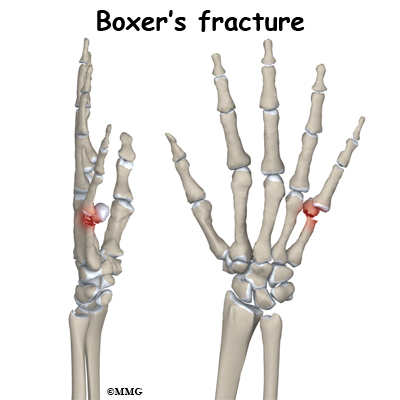
One of the main reasons why the people at Wny mma & fitness stress wrapping the hands so much when you are participating in boxing, kickboxing, or mma is because of the hand injuries that would occur. Boxers fracture, ligament injuries and other injuries specific to the hand can be daunting and put a halt to your training. There is some information posted below for your reading enjoyment, as well as a separate case study on boxers fractures. Proper punching technique and wrapping your hands are both the best preventative measures you can take, or not practicing martial arts works as well, but who really wants to do that. 
A boxer fracture is one of the most common hand injuries that occurs from utilizing an improper technique when punching. Other types of hand fractures are also possible and happen fairly often in these sports. A fracture means that the bones in the hand split apart in one or more places. This usually requires rest and a cast to heal completely. A ligament or cartilage tear is also a common hand ailment for boxers and other types of professional fighters. If the hand or wrist is flexed when a punch is thrown the ligament or cartilage can easily tear away from the bones. This is painful but does not usually require a cast. A jammed thumb is another injury that is common when punching people or stationary objects. This generally requires only time to heal properly.
With any contact fighting sport, hand injuries are not that uncommon, even with protective gear. If improper fighting techniques are used, the bones and ligaments of the hands and wrists are susceptible to breaks, tears, and fractures. The most common hand injury seen in boxing and UFC sparring is the boxer’s fracture. Normally, if a fist is made properly and strikes are done correctly, the force of the impact should be distributed across the hands to the wrist and arm evenly. The force should typically come from the second and third knuckles with proper form. With improper form, the force of the impact may come through the fourth and fifth knuckles; the result in the force of the impact not distributing well into the wrist and farm, and may cause the bones in the hand to buckle and ultimately fracture. This injury is typically seen when a hard, immobile object is punched, such as a wall or a box.
Here is a case study link on boxers fracture for your reading enjoyment


Friday, July 3, 2015

WNY MMA: OMG, That Body Shot!!!!!!

Okay, this maybe my personal opinion; I think body shots rock, like a really good shot that digs under the ribs. Where your opponent has the deer caught in headlights look on his/her face, ahhhhh priceless. Its a lacking practice now a days, I just recently seen a shot to the body again; it was from Amer Abdallah, guess its an old school tactic. The reason that I say that its a little old school is that most of the time in fights may it be boxing, kickboxing, or mixed martial arts; you don't really see a lot of body punches, unless its a knee. Its becoming something that may be easier to pick off on people because its not as expected anymore. But i'll toss you a few ways of getting your kicks in with those shots to the body. All thanks to your friendly neighborhood WNY MMA & Fitness!


Body shots are very unique things; they either sneak up on you, or they put you down right away. In both instances, they hurt like hell. KOs due to headshots are debilitating but just like they say, its like hitting a button and that person is out. Sometimes; its more like your body is just completely out of your control, you tell your body to move but it just doesn't happen. When its a well placed body shot, the pain grows from that point and spreads a few inches into the body and sits there. It hurts and you know it does, so does the guy or girl who hit you there. If you ever come to WNY MMA & Fitness and ask to spar with Corey, watch out for those liver shots. 

Now there are a few tried and true ways of getting that good body shot in; modified hook/ angular uppercut to the body, spinning back kick, left roundhouse, or a knee. If you want a good example of a well placed liver shot, check out some of Bas Ruttens pancrease fights. 

In the meantime, I got a video for you guys. Legendary Liver & Body Punches, of course you guys are gonna like it. Come by WNY MMA & Fitness and try some of these out. 


Friday, November 21, 2014

WNY MMA to Fix Those Kickboxing Mistakes

According to Joe Lewis, there are forty mistakes that kickboxers make during their training and preparation for fights. These mistakes will ultimately cost you and may at some point or another, take from your joy of training and will remove you from the gym all together. So lets nip a few of those bad habits in the butt before they become a permanent fixture. So WNY MMA & Fitness will give you ten of those forty mistakes for you to look over. 

Kickboxing Training Mistake #1

Trying to counter when you should be leading the attack. Counterattacking, like faking, is an advanced art. It requires knowing three things: the lead of the opponent, your method of avoiding his lead and the exact way of executing the proper counter-shot. Unless you know them all, initiate.

Kickboxing Training Mistake #2

Failing to step in when you punch. Whether jabbing or kicking, you always need to put your weight behind your executions for maximum power. Stepping in also increases your energy when you use the pivot-shifting and waist-pivoting (hinging) principles for punching power.

Kickboxing Training Mistake #3

Rushing your closing kick after a punching combination. The kick doesn’t have to be in cadence with the rhythm of any preceding punches. After the last punch, you should practice angling out of one of the side doors, resetting and then finishing with a power kick.

Kickboxing Training Mistake #4

Slugging toe-to-toe from the pocket with a slugger. Remember the fundamentals of fighting: Don’t slug with a slugger or hook with a hooker.

Kickboxing Training Mistake #5

Standing square while you’re in front of an opponent or in the pocket. If your shoulders are open, you not only present an easy target for your opponent but also limit your ability to fully rotate your hips through the centerline to create power in your knee strikes or inside punches.

I can say with confidence that if you are learning kickboxing under Corey Webster at WNY MMA & Fitness, you will not be making these mistakes. He is a competent coach and will definitely be there to correct this before it becomes a bad habit.

Kickboxing Training Mistake #6

When facing a southpaw or a sharpshooting hard kicker, failing to possess effective feinting or faking skills. Such skills would enable you to draw him off-balance by breaking his timing. When it seems impossible to back him up, you need to know how to disrupt his rhythm or cause him to hesitate using faking skills. Then you must work defensive timing to come in the back door with a counterattack.

Kickboxing Training Mistake #7

Failing to keep your back toward the center of the ring. You’ll end up getting walked to the ropes and find yourself trapped and punished without any room to maneuver or escape.

Kickboxing Training Mistake #8

Remaining in the same pocket position and continuing to fire combinations.You need to at least turn your opponent or change the angle or position from which you attack. Remember that standing in the same spot makes you an easy target.

Kickboxing Training Mistake #9

Failing to keep your feet directly under your punches. When you overreach with your punches, especially a straight right, you’ll end up lunging off-balance without any power. You’ll have too much hang time at the end of your punch, which leaves you unable to follow up with a left ridgehand or hook. You’ll often find yourself collapsing into your opponent directly behind your overextended punch. Or you may leave yourself open to his counter.

Kickboxing Training Mistake #10

Positioning yourself directly in front of an aggressive opponent. This will get you hit. To avoid that fate, you must know how to employ rhythm sets, both with your head movement and your footwork, to offset his alignment or range just before his trigger squeeze.

There are many more training mistakes, way too many to have posted here. I would have gotten sick of looking at them, so I saved you from that trouble. But what we can do is hit up the gym if you're every in the Western New York area, just look for Corey Webster. He will definitely fix those problems for you, he helped prepare one of the worlds highest rankers in american kickboxing. So he has what you need. Just saying. 

WNY OUT!!!!

Monday, November 3, 2014

WNY MMA Fight Updates

This past weekend four of the Wny mma fighters fought hard with three victories; a head kick knockout from Quamaine Austin, Billy Windrum with a second round arm bar, and Joe Goyette with the first round TKO which brought the belt to the gym. Can't wait to see what the gym brings back from Lace Up Promotions: Legends Rise.