Showing posts with label wny thai. Show all posts

Saturday, February 13, 2016

Muay Thai Vs. Kickboxing. What's The Difference?

For many people, Muay Thai and kickboxing are synonymous. But although the two arts are similar in some respects, there are significant differences between Muay Thai and kickboxing, especially if you’re looking into taking up one for exercise or self-defense.

What Is Muay Thai?

Muay Thai is at least a thousand years old, and was developed in Thailand. It has its roots in muay boran, “ancient boxing,” a series of techniques that were taught to soldiers to use when they were disarmed. Muay Thai grew into both a form of sport, with evidence of public matches dating back hundreds of years, and of self-defense (for both soldier and everyday Thai citizens).
During the 1800s and 1900s, Thai royalty modernized both the way Muay Thai was taught, and how matches were arranged.

What Is Kickboxing?

This brings us to the 1960s and 1970s, when kickboxing was first developed.
“Kickboxing” is a catch-all term for Indochinese fighting systems — such as Muay Thai — and the sports that grew out of these systems. Generally, when someone is referring to “kickboxing,” they’re referring to the North American version.
Originally called “full-contact karate,” kickboxing grew out of Japanese martial artists studying Muay Thai and related systems in the 1960s. Adding to the confusion is that Muay Thai fighters can — and often do — participate in kickboxing matches under different rules.

Practical Differences

Muay Thai and kickboxing are extremely different in three important ways.
1. Muay Thai is an “eight-point” fighting system while kickboxing is a “four-point” system. Essentially, this means that Muay Thai fighters can, and will use fists, feet, knees and elbows to strike. While most kickboxing systems will only use fists and feet.  Attempts to knee or elbow your opponent will risk in a disqualification.

2. The two sports have different approaches to clinch fighting and grappling. In Muay Thai, grappling is part of the art, and often when the knees and elbow strikes come into play. Kickboxing, especially North American kickboxing… Doesn’t allow grappling.  Similar to traditional Western boxing.  Any clinching will be quickly broken up by the referee.

3. Muay Thai allows as a sport, shin kicks and other kicks below the waist, although groin attacks are off-limits for obvious reasons of taste and sportsmanship, while North American kickboxing allows no attacks below the waist. These differences will lead some to argue that Muay Thai is more practical as a form of self-defense, but it is worth noting that kickboxing is largely taught as a sport, not a method of protecting yourself.

Saturday, September 12, 2015

WNY MMA and Fitness: Boxing training Myths.

BOXING TRAINING MYTHS
Here at WNY MMA, one of the most hotly debated topics is whether lifting weights can help, hinder or have a nominal effect on boxing performance and success. Hugely conflicting opinions are argued by trusted experts and coaches who have had qualified success with contradictory and differing approaches. This can often lead to confusion which means people resort to training in whatever way they like.
At a time when most sports (in particular other combat sports like MMA) have embraced innovative sports science and research, boxing has been slow, slightly resistant even, to embrace modern strength and conditioning techniques. It wasn’t always this way, however. Way back in the 17th century, boxers were revolutionary researchers and would obsess over trialling, testing and recording all aspects of training and nutrition.
But somewhere down the line the research and trials slowed down and boxing training methods today have mainly been passed from one generation to the next. The same key principles of training from the 17th century – science (technique), endurance and courage – still form the basis of how boxers are trained worldwide.
Or is it really that simple?
One important point to consider is that most aspects of traditional boxing training actually work very well. H.I.I.T. or High Intensity Interval Training has recently been touted as the fitness industry’s miracle cure to fat loss and good health but this style of training has been at the heart of boxing gyms for hundreds of years. So, why change what works?
Although the end result may be reached more by accident than design – simply by getting boxers to hit things, jump around and perform calisthenic (bodyweight) exercises hard and fast – you can actually create a very strong boxer both physically and mentally without ever having to pick up a piece of iron.
But let’s look at some practical advice to help you make better decisions about adding weights to your training. Here is the truth about some common myths:
Myth #1 Sports science is a waste of time – you can either fight or you can’t. Top professional boxers actually have large, qualified teams who manage all aspects of sports science, strength and conditioning, nutrition, supplementation and much more. Strength/resistance/weight training protocols are prevalent but the information just hasn’t filtered down to grass roots level where the sport is predominantly amateur with volunteer coaches.
Myth #2 Weight training is not applicable to boxing. Weight training is simply a form of resistance training with added weight. Your body doesn’t know or care whether you’re lifting a weight or not – it simply reacts to applied resistance. When you do a pull up, you are pulling a weight of around 60-70 kgs… your body. A medicine ball’s a weight too, isn’t it? Even when hitting the heavy bag there is a point of resistance at contact.
Myth #3 Weight training decreases flexibility. The enlargement of muscle does not compromise the ability of muscle fiber to stretch. Hypertrophy (enlargement) is independent of flexibility and large muscles are just as flexible as small muscles physiologically. The major concern for coaches is that range of motion (ROM) and flexibility will be compromised but you would have to take your body to the extreme level of a professional bodybuilder before there was any risk of negative effect to ROM.
Myth #4 Weight training leads to weight gain. Weight training actually has a desirable effect on body composition and, importantly, fat loss. Yes, diet and lifting weights can add muscle and weight if you are training and eating for hypertrophy but that’s not the only way to do things. You can prepare for strength, power and speed without gaining and by doing so you will optimise lean body mass as a desirable bonus.
Myth #5 Weight training slows you down. Again, research shows the opposite. You will gain significant increases in punch velocity and punch endurance with intense strength training, not slow down.
Myth #6 If you want to punch better you should focus on the chest and the arms. As long ago as 1991, Verkhoshansky reported that a whopping 76% of the effort from a straight jab comes from the trunk and the lower body. In other words, only 24% of a punch comes from the arm and surrounding muscles. So, as well as focusing on correct technique, it would be advisable to have a strong program dedicated to the large compound lifts that work the lower body and torso (deadlifts, lunges, squats etc.)
If your coach encourages you not to lift weights, then he may still have a very effective program that will help you develop into a strong and proficient boxer. It is vital that you spend a lot of time perfecting the science or skills of boxing and your strength will develop naturally anyway as a direct result. However, it has been well documented, acknowledged and understood for a good few decades that resistance weight training can assist with significant benefits to your boxing development and success. By adding just a couple of well-designed weight training sessions to your training, you may just take your fight career to the next level…


See more at: http://boxingcoachderek.com/strength-myths/#sthash.fh4VyfxA.dpuf
Edited By: Ted Fisher

Saturday, July 25, 2015

WNY MMA: Wrapping hands

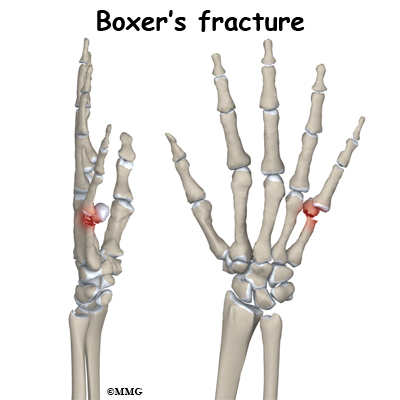
One of the main reasons why the people at Wny mma & fitness stress wrapping the hands so much when you are participating in boxing, kickboxing, or mma is because of the hand injuries that would occur. Boxers fracture, ligament injuries and other injuries specific to the hand can be daunting and put a halt to your training. There is some information posted below for your reading enjoyment, as well as a separate case study on boxers fractures. Proper punching technique and wrapping your hands are both the best preventative measures you can take, or not practicing martial arts works as well, but who really wants to do that. 
A boxer fracture is one of the most common hand injuries that occurs from utilizing an improper technique when punching. Other types of hand fractures are also possible and happen fairly often in these sports. A fracture means that the bones in the hand split apart in one or more places. This usually requires rest and a cast to heal completely. A ligament or cartilage tear is also a common hand ailment for boxers and other types of professional fighters. If the hand or wrist is flexed when a punch is thrown the ligament or cartilage can easily tear away from the bones. This is painful but does not usually require a cast. A jammed thumb is another injury that is common when punching people or stationary objects. This generally requires only time to heal properly.
With any contact fighting sport, hand injuries are not that uncommon, even with protective gear. If improper fighting techniques are used, the bones and ligaments of the hands and wrists are susceptible to breaks, tears, and fractures. The most common hand injury seen in boxing and UFC sparring is the boxer’s fracture. Normally, if a fist is made properly and strikes are done correctly, the force of the impact should be distributed across the hands to the wrist and arm evenly. The force should typically come from the second and third knuckles with proper form. With improper form, the force of the impact may come through the fourth and fifth knuckles; the result in the force of the impact not distributing well into the wrist and farm, and may cause the bones in the hand to buckle and ultimately fracture. This injury is typically seen when a hard, immobile object is punched, such as a wall or a box.
Here is a case study link on boxers fracture for your reading enjoyment


Monday, July 6, 2015

WNY MMA & Fitness: Rock Hard Shins

So, after watching UFC for the last like decade, you have been introduced to a number of combat arts that have been proven to be effective in the cage. One of those styles is a striking art from Thailand called muay thai, or for the initiated, the art of eight limbs. Unlike other styles that you may be familiar with, kickboxing for example; only makes use of the fists and the feet to do damage. In muay thai; you have the fists, elbows, knees, and shins. But wait, isn't muay thai just like kickboxing, ummmmmmm... next question. As you can see, it utilizes many more tools than you would find in american boxing and kickboxing, pretty much giving you more to put your opponent down with. At WNY MMA & Fitness we have all three, but Ill be cover one particular aspect of muay thai in this article; shin conditioning.

 Now I know what you're thinking, they kick with there shins, it hurts when I bump my shin on the edge of a table. Through proper shin conditioning and years of training, there have been muay thai and Kyokushin guys have put their shins through baseball bats with little more than a trickle of blood. Read what I just wrote again so we are both on the same page, I said PROPER shin condition. Lets go over what improper shin conditioning is, by no means do you go outside and kick trees. I know, you see videos of guys in thailand doing it, here's the thing about that; they are kicking banana trees, they not sturdy like the trees we have in our yards. If you do, you may kill the nerves in that area, but you will also increase the risk of fractures in the shin, ultimately you will be unable to train for a while. What we do at WNY MMA & Fitness, along with other muay thai gyms, is that we will use thai pads and the heavy bag as the primary source of shin conditioning. Its a gradual progression from soft and tender shins to shins of steel.
How does this happen, I glad you asked. Your skeletal system goes through a breakdown and remodeling cycle quite frequently. I posted a video above for you to take a gander at that will give you a very cool view of the process. Anyway, when you put stress on the bone over a long period of time, I.e. when you kick the bag or when you do weight bearing exercises like squats, the body will breakdown old bone and rebuild it with new calcium deposits. This is important because this is how your bones become harder and stronger, this process can not be rushed. This is not to say that your shins won't hurt in the process, they will hurt when you first start training muay thai. When they start to hurt always give your shins time to heal, during that time its always good to work your knees or the other striking tools. When sparring at WNY MMA& Fitness, you will be wearing shinguards, so no worries. 

Monday, December 8, 2014

WNY MMA: What You Should Be Doing Alongside Your Muay Thai Training

The following workouts will be good for you to do besides your training at WNY MMA. It's important to understand that you will need to take your training into your own hands for you to see any improvements. Work diligently and give 100% of your self to it and you will see technique improvements and gains in strength and conditioning. 

Get started with a basic training routine that you can do on your own or with a buddy.

These 5 basic training workouts here are focused on getting you started and building and developing a training foundation, to start building muscle endurance, losing weight and burning calories to get you in better overall shape.
Even if you are a beginner in martial arts Muay Thai. With anything new… Start slow and go at your own pace. And consult your physician before you begin any of these exercises.
These are some of the basic training routines that my beginner’s at my gym do. And it will give you an idea on how Muay Thai fighters train. Go at your own pace. And know that you don’t have to do ALL of them. This is just a basic layout of some of the routines you can perform.
I’ve added youtube videos of some of the best fighters training. Check them out.
Above all have fun and enjoy the journey.
The first and most important part of the training is to do a proper warm-up and stretch before you start to try these martial art techniques. Warming up will actually increases your performance and reduces the chance of injury. Remember you are just learning these techniques so take your time GO SLOW and really focus on the techniques for now.

Stretching Before You Begin:

Start your stretching by using controlled, leg and arm swings that make use of your body’s natural range of motion. Like arm swings, truck rotations, and twists. This is called Dynamic stretching. Don’t force your muscle past your own range of motion. That comes after the workout.
  • Circle your arms forward and backwards about 8-10 times each
  • Rotate your neck up and down, side to side, left to right.
  • Truck rotations 8-10 times.
  • Frankenstein’s: Stand shoulder width apart, hands out in front and lift your foot to your hand in a swinging motion. Don’t forget to go backwards too.
  • Leg rotations: Step on the ball of the foot and rotate your leg back and forth like your putting a cigarette but out. 8-10 times each leg.

Road Work

Getting your road work in is a big part of Muay Thai training and training at wny mma for striking for that matter. This will help increase your conditioning and build strong shins for kicking.
Start small. Don’t measure the distance. Measure your time.
Maybe 10 minutes of light running (you don’t have to go full out sprints) 3 times a day after your stretching.  And add 2 minutes with each new run, until you hit up to three mile. Try and run outside if you can, early in the morning when the sun is not beam down on your back. Running will  help a lot with your cardiovascular training. You will be able to last longer hitting the bags, Thai pads, and fighting inside the ring or in a self defense situation. It will also help strengthen your leg muscles, which is a must for Muay Thai.
It takes a while to get used to, but I can tell your right now it will be one of the best benefits you’ll gain. It will help get your busy day started along with your training, and have a better peace of mind. Like meditating — it’s one place your don’t have to think about anything.

Shadow Boxing

Shadow boxing is one of those things that you Have To Do in order to practice and perfect ALL of your Thai boxing techniques. It helps you to develop your strategies against any type of opponent. 
If you can, try shadow boxing in front of a mirror (your local gym or Muay Thai school should have one). This will help to make sure that your executing your martial arts techniques correctly from every angle. If you see a mistake in your attack or defense, fix it. The mirror never lies.
Stand in your basic fighting position and go through all the Thai Kickboxing techniques you know. Don’t worry about looking silly. EVERYONE does their first time. As you get better start picking up your speed (keep proper form and periodically check yourself in the mirror for mistakes) and imagine fighting someone in front of you. Make it as realistic as you can, moving your feet and head and mixing the punches and kicking for good combinations. Try and go for 2 or 3 rounds with 3 minutes on and a 1 minute break.


Rope Skipping

Jump roping is also a vital part to your training. No this isn’t the type of jumping roping you did in grade school. This type of training not only provides great stamina, but it also helps build hand-eye-coordination, and builds strong shoulder, wrists, forearms, calf and leg muscles too.
Constantly mixed up your footwork… Bounce with both legs, one leg, move forward, backward, side to side, bring the knees high to your chest, chris-cross if you want to get fancy. Just make sure your always changing your rhythm. Try 3 minutes, one minute rest for 2 to 3 rounds.

Bag Work

The bag training is great for practicing your punches, kicks, knees and elbows. Hitting the bag will give you a better realistic feeling on fighting an opponent and at the same time give you a great workout. The benefits of bag training will improve your movement and timing coordination. It’ll also build stamina in your shoulders and legs with each strike you throw, which in turn will add more power to your Muay Thai punches and kicks.
When working on the Thai bag remember to always wrap your hands to protect your knuckles and wrist from taking damage. And again, take your time. You don’t have to go ROCKY style on the bag. Work on executing clean, technical punches and kicks. Perfect your form. The speed and power comes later in the actual muay thai class. Try going 3 rounds on the bag mixing in all attacks. And don’t forget your footwork and head movement.


Muay Thai Pad Work

I’m not going to talk about pad work here. I’ll save that for another blog. Pad training is a more advance method of working out, and should only be done with someone who knows what their doing. Ask your Kickboxing coach (Kru) to set some time aside to hold pads for you.
Muay Thai Pad training is an art in-it-self, and takes a lot of time and constant pad holding the master. A good pad trainer will mix up all the different techniques. Offense and defense to simulate different situations you might find yourself in a real fight. They’ll even dissect what your strengths and weaknesses are and come up with a Muay Thai fighting style that best suits you.

Monday, September 8, 2014

We Don't Falsify Anything at WNY MMA & Fitness


As I know most of you understand, I really like martial arts. I will practice anything that I deem interesting and useful. This past weekend I wanted to check out a demonstration of some "muay thai"; yup, you can probably tell where this is gonna head. I already have some background in the basics of muay thai, I was really there for a quick refresher so to speak. The guy teaching it seemed a little new to it but I didn't pay it any mind. That is until we started running through the impromptu class, when the guy proceeded to "fix my posture" I knew something was up. It wouldn't have been so bad if it was still in the realm of muay thai, this was something completely different.

Look, it was clearly not muay thai that I was receiving. It was something they were trying to market as muay thai, and what's worse is that he used Stonehorse's name trying to verify is "legitimacy" it was upsetting. Mentioning more of Stonehorse's qualifications than his own. When you are looking for something, its always best to see it first hand and to experience it. That's one of the things that I can say about what is provided at WNY MMA & Fitness, its legit. Where most places need to mention how authentic their program is, action speaks loader than words. The proof is visible everytime you walk through the front door.

I'm telling you of my experience so you know that it could happen to you, unless you come to WNY MMA & Fitness, then you are definitely getting something good. 

Tuesday, August 26, 2014

WNY MMA & Fitness Nutrition to Keep Training Hard

WNY MMA & Fitness Nutrition to Keep Training Hard

There are some diet fads that are circulating the net and those infomercials that you watch so religiously, but some of those will actually do more harm than good for you and your goals for a stronger healthier body. It will also effect how hard you can train as well as your recovery time after those training sessions. So let me give you some small gems of information, courtesy of WNY MMA & Fitness. 

Carbohydrates

I know what you are thinking, you want to cut out your consumption of carbs because you want to lose weight faster. Let's look at why this is actually a bad idea, it may change your mind about completely cutting out carbs. When eating and digesting carbohydrates, they are broken down into smaller units that are absorbed by the small intestine to be transported to the liver (i would tell you the smaller units, but the names get a little long so just bare with me). Glucose is sent from the liver to the tissue in the body, this includes the muscles and the brain; to be used as a source of energy. Here is a diagram that will give you a better idea of how this works: 

What does this mean for fighters, people who are constantly expending the glycogen and the free circulating glucose; you need to consume carbohydrates to have energy. There are many alternatives to overly processed breads and pastas; fruits, vegetables, oatmeal, milk, whole grain breads, etc. What does this mean for you, if you are training hard, make sure you are getting the recommended amount of carbs before, during and after training. I know when guys are leaving after doing muay thai or american kickboxing at WNY MMA & Fitness, looks like they need some carbs in their life. 

Saturday, August 16, 2014

WNY MMA & Fitness: All leg kicks are not equal

WNY MMA & Fitness: All leg kicks are not equal


Leg kicks; if you are on the receiving end of them, then they are the bane of your very existence. They hurt bad and linger, slowly giving you lead feet as a fight goes on. When people hear about leg kicks, they immediately think about muay thai, can't blame them. I'm here to show you some very interesting variation to the low kick and how they can add some deceptive touches to your arsenal. Think of this as a favor from your friendly neighborhood WNY MMA & Fitness. 

I will only be highlighting the kick from two striking styles in particular; muay thai, and kyokushin. Don't underestimate kyokushin style leg kicks, those things can do some damage and at close range aswell. Besides, kyokushin has laid the ground work for some very vicious kickboxing styles. This style is the Dutch style, most notable for their powerful punching combos and vicious leg kicks. Some notable people of this style are: Ramon Dekkers, Rob Kaman, Allistar Overeem, Andrew Souwer, etc. 
watch this guys fight reels, scary!!!


Muay thai style:


If you ever took a leg kick from a muay thai guy without shinguards, you definitely identify with this poor guy. People that train styles like muay thai, kyokushin and other styles of the like; are accustomed to getting a shin to the leg. It's an everyday occurrence. But for those who have not, you will be put on your keister. People have compared getting hit by a thai style leg kick to someone swinging a baseball bat at their leg. I for one, am not gonna ask how they know what it feels like to take a baseball bat the leg. Ill ask one of the guys at WNY MMA & Fitness

With the muay thai leg kick its rotation of the hip all the way, that's where the money is. That and the stationary foot has to rotate to allow the hips to open up completely, this also helps turn the kicking leg over so that the shin will land correctly on the thigh maximizing its effectiveness.

THE LEG KICK:

  • Start from your Muay Thai fighting stance.
  • Step forward and slightly out of the center line.
  • Kick with your back leg and twist on the ball of the foot of the front leg (standing leg). The knee of the standing leg is slightly bent.
  • Kick with the bottom of the shin and not with the foot. The foot of the kicking leg is extended but relaxed. Turn your hips with the kick.
  • At impact, the kicking leg is 80 percent extended.
  • Don’t bend the kicking leg too much at the beginning. Muay Thai roundhouse kicks are not snapped.
  • Extend one arm, keep the other hand close to your head and don’t lift the elbow. Make sure both sides of your head remain protected.
  • Go back the same way and plant the kicking leg at the exact same spot where you started.
  • If you notice that your opponent keeps looking at your head, attack him with low kicks.
  • The cut kick is an even lower roundhouse kick variation than the thigh kick. Thigh kicks are usually easier to apply.
  • Practice the Muay Thai thigh kick on a high heavy bag.
  • Exhale as you kick.
  • Keep your chin down
THE CUT KICK:

The cut kick is a variation on the muay thai leg kick. It's used to unbalance someone by intercepting an on coming kick; when someones weight is on one leg. This is done by kicking along the line of an incoming kick, the target is right below the hollow of the knee. This kick will put your opponent on his or her side if performed correctly. You will hook your foot above the calf of your opponent, following through with a closing of the hip and pulling your foot across your body. With some practice you will catch this thing like crazy, train with the WNY MMA guys to get it. Need more clarification, here's a video. Don't worry, there are English captions. 


Kyokushin leg kicks and set ups:


Now before you start bashing me for posting karate here give me a minute to show you that there is something valuable in this styles kicks. Kyokushin is known for its knockdown format; what that means is that they get into a ring or on a mat and go balls to the wall with nothing but a mouth guard and groin cup. Because of the bare knuckle aspect of the style; no punches to the face are allowed, but you will take a foot or shin to the mouth or face. Its not like the point karate that you are used to seeing, you win by beating the crap out of the other guy. Because the distance for this style is so close, it doesn't leave alot of distance for kicks. So you be creative with them. There are a lot of tactics of making someone miss a leg kick to get your own in. 

The kick is similar to the muay thai in the fact that there is dependence on the hip for the deliverance of power; but before the kick lands, there is a snapping of the leg near the end of the kick to deliver the power. There are a few set ups for the kicks, but they are to get the clearance for a clean leg kick. Mostly movement of the legs. Here is a video of the mentioned kicks below: 


Like those?

This has got to be the longest article I have written for you guys, hope you enjoy it. But what is a usual article from me without extra videos for your viewing pleasure. I've got a good mix of them for you today; leg kicks, lovely leg kicks. Enjoy and come train with is, the door says WNY MMA & Fitness. See you soon!!