Showing posts with label buffalo thai. Show all posts

Monday, January 18, 2016

5 Tips For A More Effective Stance

The fighting stance is the most fundamental position that you will ever learn in any type of martial art. A proper stance allows for strong, effortless movement and an easy transference of force from body to extremity. Furthermore, having a good stance allows you freedom of movement that directly translates into the individual expression of the practitioner’s style. Whether you are a martial artist or an athlete of another physical discipline, there is no disadvantage in having a good stance. It will only make you a better at what you do. 

fighting stance, muay thai stance, kickboxing stance, martial arts stanceFrequently in the gym I see people sacrifice their stance in order to land a blow or to get a specific grip on their opponent.While it would seem to make solid sense to attempt such an action, remember the goal of combat is not just to hit your opponent at all costs. It’s to do so in a way that weakens their position while at the same time strengthening your own.

The stance is the starting position for all martial movement. I feel that the stance nowadays has lost importance in many styles of martial arts and combative sports. It is still taught, but within the student population there seems to be a lack of information as to why certain actions are performed. In order to perform at your best it is absolutely necessary to find, perfect, and understand your starting position. Can you imagine what would happen if you attempted a max deadlift without knowing how to properly secure yourself in the beginning of the lift? The same principle applies to martial arts and, for the sake of this article, muay Thai.

In muay Thai there are several stances you can adopt during your training. Everyone is built slightly differently and these differences will determine what is the optimal stance for you. I personally feel the stance you adopt should be the one that allows for maximum ease, fluidity of movement, and transference of force. 

The great Bruce Lee put it best: “The arms and kicking leg are important only because they are the vehicles of body force. They, the tools, only give expression to body force when the body is in proper alignment. The position of the hands and arms and of the legs and feet that facilitate easy body expression is important.”

Below are five tips that will help better your stance:

1. Foot Position

The feet are the most important factor in determining your balance. The more the martial artist can feel and control the position of the feet the better he or she will be at expressing intention (punching, kicking, moving, etc.).

fighting stance, muay thai stance, kickboxing stance, martial arts stanceThe feet should be staggered and placed slightly wider than the hips (but for muay Thai no wider than the shoulders). The weight distribution between both feet should be fifty-fifty. Both feet should be angled slightly to the side and the knees should be facing in the same direction of the feet. Having the feet and knees aligned will minimize any leakage of force and provide a more stable base for the athlete. The rear heel should be raised with the weight placed on the ball of the foot. The elevated heel acts as the trigger for the majority of your striking arsenal and it allows your feet to be alert and move quickly. Never stand flatfooted on both feet as your movement can easily become sluggish.

2. Abdominal Tension and Hip Position

fighting stance, muay thai stance, kickboxing stance, martial arts stanceWhenever you are in a fighting stance you want a small amount of tension kept in your abdominal muscles. Also it is important that your pelvis be positioned directly underneath your shoulders. This will allow for a stronger defense, assist you in transferring force to your extremities, and improve balance by keeping your spine in an optimal position.

Take my word for it; you do not want to be hit in a relaxed stomach. Body shots have a nasty way of stealing the life from you, especially when they are met with zero resistance. Think of abdominal tension as your armor. Don’t go to battle without it! On a scale of one to ten, you want your tension level at around a two. This amount of tension will aid your movements but will not subtract from your ability to move or breathe effectively.

3. Arm Position

The placement of the fists, forearms and elbows is extremely important in muay Thai. Having these three things in the proper position can greatly add to you offensive and defensive capabilities.

fighting stance, muay thai stance, kickboxing stance, martial arts stanceThe right (or rear) elbow and forearm stays close to the body and protects the solar plexus, the liver, and the ribs. Note: I said that the elbow stays close, but it is not glued to the ribs. Allowing the elbows to protrude an inch or two can discourage your opponent from kicking to the body as they may smash their foot into your elbow. That being said, do not flare your elbows out to the side and open up the ribcage. The right (or rear) fist stays close to the face and is positioned on the jaw or cheek bone. This protects the face and gives your fist the appropriate path to attack your opponent. 

The left (or lead) arm is placed slightly in front of the body to act as a first line of defense and offense. The forearms and elbows aid in protecting the solar plexus and the ribcage. Unlike the rear arm, the lead arm is going to be very active during combat and therefore should be placed away from the centerline. When finding your optimal arm position make sure the arm is not extended to far away from the body so that the position exhausts your shoulders and prevents the generation of force. The left fist should be held at nose level. This will help protect your centerline while not obstructing your vision.

4. Head Position

fighting stance, muay thai stance, kickboxing stance, martial arts stanceThe position of your head it also very important in martial arts. A bad head position can lead to knockouts and broken noses. In every gym you will hear trainers yell at their students, “Chin down! Hands up!” The head should be slightly tilted forward with the chin practically glued to your collarbone. Keeping the head in this tucked position will aid in protecting your nose and the soft tissue of the eyes. Under no circumstances must the head move from this position.

5. Movement in the Stance

Even if you have the perfect stance, for it to be effective in combat movement must be introduced. Standing perfectly still is going to make you a sitting duck for your opponent. Moving targets are hard to hit. If you don’t move, your opponent could close his eyes and still manage to hit you square in the face.

There are many different cadences fighters can adapt and in my experience everyone has their own different “swagger” while fighting. To adapt a cadence, I recommend watching fighters you enjoy and take bits and pieces from their movement patterns to add to your own style.Whatever your cadence may be just make sure that it contains no rhythm (constantly repeated movements). If it does, it becomes easy for your opponents to time you with counter shots.

Thursday, January 7, 2016

List of Knee Strikes

List of Knee Strikes - Martial Arts Techniques
This section provides details and instructions for a wide variety of knee strikes. These techniques are effective for many close range self-defense situations. While knee strikes are not allowed in some martial arts sparringmatches for safety reasons, they are used extensively by many other martial arts such as Muay Thai.
Given the short range of knee strikes (versus kicks and punches), this technique is often combined with clinching or holding your attacker so he can not escape and move outside the limited range of your knee strike. Self-defense targets include the an attacker's head/chin, ribs, groin, quad muscles, etc.
For information on kicking techniques, please visit the main Martial Arts Kicks section.
Knee Strikes - Videos and/or written instructions
  • Diagonal Knee Strike
  • Flying Knee Strike
  • Front Knee Strike - The front knee strike is also known as a vertical knee strike.
  • Jumping Knee Strike
  • Knee Bomb - The knee bomb is a well known Muay Thai technique.
  • Knee Thrust
  • Round Knee Strike - A round knee strike is also known as a lateral knee strike, horizontal knee strike, etc.

Tuesday, December 8, 2015

What Is Better For Fighting: Boxing or Kickboxing?

A common question in martial arts circles is what styles are superior in a street fight. In many cases, it's an "apples and oranges" argument, such as comparing a ground fighting arts, such as wrestling against a stand up art like karate. Kickboxing and boxing are very similar, however, and a comparison between them makes more sense than many others.

Shared Advantages

Boxing and kickboxing share many advantages when it comes to a street altercation. Both provide fighters with tools and strategies to use if attacked. Both include rigorous physical training to make attacks hit harder and to help the athlete absorb damage. Perhaps most important, as defensive tactics instructor Lee Sprague points out, boxers and kickboxers spend time getting hit. That means the blows they receive in a fight won't make them panic.

Shared Disadvantages

The shared disadvantages of kickboxing and boxing stem from the fact that both are practiced as sports. Sports follow rules, and rules don't exist in street defense situations. For example, kicks to the groin, although very common in a street fight, aren't allowed in boxing or kickboxing. Thus neither teaches how to deliver or defend against one. Similarly, neither style deals with eye gouging, biting, attacks to the throat or any kind of ground defense.

Kickboxing Advantages

The chief advantage kickboxing has over boxing is its range of tools. Kickboxers train their hands, feet, elbow, knees and sometimes heads as weapons for striking. Not only do they learn how to use those weapons, but they also learn how to defend against them. As Joe Lansdale put it describing an altercation with a boxer, "He was pretty good, but I had four wheel drive."

    Boxing Advantages

    Where kickboxing teaches a range of tools, boxing specializes in one thing and one thing only: punches. A skilled boxer punches so well that boxing was the only western martial art to impress Bruce Lee enough to include its concepts in his martial art Jeet Kun Do. Boxers also tend to be faster than kickboxers, again owing to the necessity of defending against the lightning fast jabs or their training partners.

    Importance of Context

    There is no such thing as a superior martial style, according to martial arts instructor Dave Coffman. There are superior athletes, superior coaches and superior methods of training. A dedicated, talented kickboxer with a skilled coach will beat a mediocre or unmotivated boxer, and vice versa. Between two equally talented athletes, one a boxer and one a kickboxer? Coffman says "it will boil down to who wants it the most on that particular day

    Tuesday, November 10, 2015

    How to Improve Your Endurance During Kickboxing Training

    Boxing is a sport that requires muscle strength, speed and endurance. It builds confidence and provides many athletes with full-rounded training as well as an outlet for stress relief. The methodology for building endurance at both the professional and amateur levels is widely discussed. Boxing is a segmented sport that consists of intense rounds with short breaks. Focusing on that in training will help build the muscle strength and endurance needed to improve.

    Step 1

    Set up a running schedule. Running is an excellent way to increase overall stamina. Boxing Training suggests the routine for running you select will depend on the type of boxing you want to do. Professional boxers should include long-range running programs -- run 3 to 5 miles at one time. Amateurs can work on wind sprints to build stamina. Sprint 1 minute, 45 seconds, then walk for 1 minute and repeat. Continue with this pattern 10 to 12 times.

    Step 2

    Skip rope, varying speeds. Jumping rope is a practical cardiovascular workout for a boxer. Ropes are portable for easy access between boxing sets. Skipping rope will improve footwork and build shoulder strength and enhance stamina. Begin slowly for one minute and then increase the speed. The American Council on Exercise recommends jumping low to lessen the impact to your knees and ankles.


    Step 3

    Spar with a partner and focus gloves. The partner wears the gloves to provide the boxer with a target to hit. Sparring for several minutes at a time enhances boxing skills, and the focus gloves improve speed and flexibility.

      Step 4

      Hit a heavy bag regularly. Heavy bags are a key component to a boxer's training program. Set up rounds that vary in time lengths and speed. Work out for 10 minutes, than take a 1-minute break before starting again. Incorporate rope jumping into heavy bag training by working the bag for 10 minutes and then jumping rope for three.

      Saturday, July 25, 2015

      WNY MMA: Wrapping hands

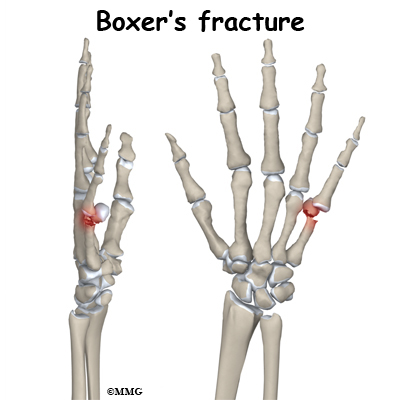
      One of the main reasons why the people at Wny mma & fitness stress wrapping the hands so much when you are participating in boxing, kickboxing, or mma is because of the hand injuries that would occur. Boxers fracture, ligament injuries and other injuries specific to the hand can be daunting and put a halt to your training. There is some information posted below for your reading enjoyment, as well as a separate case study on boxers fractures. Proper punching technique and wrapping your hands are both the best preventative measures you can take, or not practicing martial arts works as well, but who really wants to do that. 
      A boxer fracture is one of the most common hand injuries that occurs from utilizing an improper technique when punching. Other types of hand fractures are also possible and happen fairly often in these sports. A fracture means that the bones in the hand split apart in one or more places. This usually requires rest and a cast to heal completely. A ligament or cartilage tear is also a common hand ailment for boxers and other types of professional fighters. If the hand or wrist is flexed when a punch is thrown the ligament or cartilage can easily tear away from the bones. This is painful but does not usually require a cast. A jammed thumb is another injury that is common when punching people or stationary objects. This generally requires only time to heal properly.
      With any contact fighting sport, hand injuries are not that uncommon, even with protective gear. If improper fighting techniques are used, the bones and ligaments of the hands and wrists are susceptible to breaks, tears, and fractures. The most common hand injury seen in boxing and UFC sparring is the boxer’s fracture. Normally, if a fist is made properly and strikes are done correctly, the force of the impact should be distributed across the hands to the wrist and arm evenly. The force should typically come from the second and third knuckles with proper form. With improper form, the force of the impact may come through the fourth and fifth knuckles; the result in the force of the impact not distributing well into the wrist and farm, and may cause the bones in the hand to buckle and ultimately fracture. This injury is typically seen when a hard, immobile object is punched, such as a wall or a box.
      Here is a case study link on boxers fracture for your reading enjoyment


      Thursday, July 23, 2015

      WNY MMA & Fitness: Awesome Tips On Sparring

       WNY MMA & Fitness: Awesome Tips On Sparring

      Sparring at wny mma & fitness is very important for everyone who is interested in being able to defend themselves and their loved ones competently. It is only through practiced combat (sparring) that you can develop the skills necessary. For example, timing, distance and strategies can only really be practiced while sparring. It is very important to directly apply what you learn in training to your sparring. However, it is very common for people to forget everything learnt. You have probably seen it before: 2 people who look skilled in training start to spar each other. All skill goes out the window, along with all their practiced techniques and combinations. The sparring match looks like a mixture between a sloppy schoolyard fight and 2 orangutans fighting over a mate!
      The following is a list of the Top Ten Tips to improve your sparring.

      Breathe:
      Sounds simple but very few people breathe correctly when they spar. This is why you get tired really fast. It is also the reason why situations on the street seem to last only a matter of seconds and then it's a battle of who can get their breath back first in order to finish the fight! We tend to hold our breath when fighting and this is what tires us out. Even though you may be able to hold your breath for a long time it is very different during a physical situation. Make sure that you breathe out when you strike. It should be a short sharp exhalation coming from your diaphragm and lower abdomen. When you breathe like this it also keeps your muscles tensed so that you are better protected against attacks.

      Guard Up:
      Another simple one in theory. Make sure that your guard is tight. Practice with heavy gloves to condition your arms because there is nothing worse then not having the strength in your arms to hold your guard up during a fight. Your guard is extremely important before you launch an attack. Most people at beginner and intermediate level get struck when they are trying to strike. Keep your guard tight when you attack and this will minimize your opponents counter attacking capabilities.

      Move:
      Don't stand in the one spot. A fight is not determined by who is standing in the centre of the ring. A wny mma fighter that moves controls the fight. Even if you are bigger and stronger than your opponent, keep moving. You can stand toe to toe with your opponent and battle it out but this way always tires out and injures both fighters. There are specific times during a fight when you should stand your ground but all other times you should be moving. When you are on the balls of your feet, you have a much faster reaction time too.

      Multiple strikes:
      Follow up all strikes. Don't look for the one strike wonder. When you launch a strike and it hits, capitalize upon it and continue to strike. If you throw a strike and your opponent blocks, continue to strike at the areas that your opponent isn't blocking. You increase your statistics of winning/striking by throwing multiple attacks.
      Legs to hands to legs:
      Use combinations of kicks and punches. This makes it a lot harder for your opponent to defend. If you are a distance away from your opponent then use a kick to bridge the gap. This should then bring you closer so that you can strike with your hands. Also, if you are close already and using your hands, you can break away with a kick to give you distance again. Try to make the exchange between legs and hands flow without missing a beat.
      Don't Rush in:
      Too many people just charge in. This may work against inexperienced people but aggression alone will not beat an experienced opponent. Take your time. It is important to attack but make sure that you never neglect defense for offence because this is when a lot of fighters get knocked out.
      Think:
      Its is very important to think during a fight. You need to be able to strategize and figure out your opponent's strengths and weaknesses. Can your opponent fight equally from both sides? Do they drop their guard when they kick? Are they mainly a puncher, kicker, grappler? Etc. You need to analyze it all and in a short period of time. This process starts before you even enter the ring. Watch your opponent and study them. All information helps you to form a combat plan.
      Work on your weaknesses:
      Make sure that you work on your weaknesses during training. Things that are weaknesses now will be strengths in the future if you work on them. Don't be afraid to try new things in training. Obviously when the pressure is on (street or competition) you should only use what you know and what you are good at. All other times increase your abilities.
      Alternate targets:
      Keep changing targets because this makes it very hard for your opponent to defend against. A lot of people starting out tend to 'head hunt'. As you get a bit more experienced and confident, start to work the body. Strikes to the ribs, chest, solar plexus and kidneys can take the wind and the will out of a fighter. Striking to these areas also creates openings in other areas. It is impossible for your opponent to block everything at the same time, so use this to your advantage.
      Diversify:
      Spar as many different people as possible. The more diverse the better you will become. Spar people who are lighter, heavier, taller, smaller, experienced, inexperienced etc. Try to spar using different rules and spar people from different styles. This will turn you into a well-rounded fighter, making you more versatile and giving you greater skills.

      Hopefully, the above has given you a few new ideas and helps you to become even better at sparring. The only real way to get better at sparring is to spar so give them a go the next time you are in the ring.

      Friday, July 17, 2015

      WNY MMA & Fitness: Boxing Heavy Kickboxing?


      Its true that kickboxing has so many rule sets, that it's hard to keep track of most of the time. Its fine because most people only know of a handful of them. For the people who know more, well you did the research, kudos to you. I'm here to provide you with a little taste of one of the many rule sets of kickboxing. One of which, I believe you can take into consideration when you need to liven up the ol' muay thai or other "insert here" style kickboxing. For example; with muay thai, some judges score elbows, knees, clinch and kick higher than punching and so it is not as favored but its still used to set up the other skills. For the dutch style; because of the emphasis on aggression, everything is pretty much scored evenly, coupling that with many of the schools that were mostly kyokushin karate dojo before accepting the training rubric of muay thai and boxing, Its a very flavorful style. If you are a member of a gym that has american kickboxing, muay thai and boxing; then you are pretty much developing a similar style, just like at WNY MMA & Fitness.

      One of the reasons why you can benefits from training dutch style is the strong emphasis on striking in combinations, these combinations are normally followed up by a low kick. It works wonders, people aren't thinking about their leg when they are trying not to get their head knocked off. You thought tall fighters were hard to deal with before, wait until you fight a dutch kickboxer. They are normally taller than you, and have longer limbs than you; so they can hit you from anywhere. Oh, and they're extremely aggressive.


      Its also good for smaller fighters; Ramon Dekkers was a short fighter, but he was incredibly aggressive. He would demolish the poor saps who decided to get into the ring with him, he has a dutch style kickboxing background. In some instances, shorter fighters have to be more aggressive just to stand a chance against their taller opponents. So there is the benefit of this particular kickboxing style.

      I'll toss you a bone before I get to the videos that will be included in this article. Last year, I was attending the arnold classic because the kickboxing team at UB was participating in the competition. After a couple of fights, Allistar Overeem walked over to the ring that we were standing at and decided to watch the heavy weights fight. After one of the guys got his thai pads signed, I asked about a good dutch style combo to use; jab, cross, fake the lead hook into a rear leg kick, drop the foot down right where it is to follow up with a rear hook to the head in a switched stance. Depending on where you started, it would be southpaw or orthodox. I've held on to that little gem of information for a while.

      Well there is my rant on dutch style. I've adopted the style, mainly because I like boxing. In the meantime stop by WNY MMA & Fitness for some rounds. you may pick something up.


      Monday, July 6, 2015

      WNY MMA & Fitness: Rock Hard Shins

      So, after watching UFC for the last like decade, you have been introduced to a number of combat arts that have been proven to be effective in the cage. One of those styles is a striking art from Thailand called muay thai, or for the initiated, the art of eight limbs. Unlike other styles that you may be familiar with, kickboxing for example; only makes use of the fists and the feet to do damage. In muay thai; you have the fists, elbows, knees, and shins. But wait, isn't muay thai just like kickboxing, ummmmmmm... next question. As you can see, it utilizes many more tools than you would find in american boxing and kickboxing, pretty much giving you more to put your opponent down with. At WNY MMA & Fitness we have all three, but Ill be cover one particular aspect of muay thai in this article; shin conditioning.

       Now I know what you're thinking, they kick with there shins, it hurts when I bump my shin on the edge of a table. Through proper shin conditioning and years of training, there have been muay thai and Kyokushin guys have put their shins through baseball bats with little more than a trickle of blood. Read what I just wrote again so we are both on the same page, I said PROPER shin condition. Lets go over what improper shin conditioning is, by no means do you go outside and kick trees. I know, you see videos of guys in thailand doing it, here's the thing about that; they are kicking banana trees, they not sturdy like the trees we have in our yards. If you do, you may kill the nerves in that area, but you will also increase the risk of fractures in the shin, ultimately you will be unable to train for a while. What we do at WNY MMA & Fitness, along with other muay thai gyms, is that we will use thai pads and the heavy bag as the primary source of shin conditioning. Its a gradual progression from soft and tender shins to shins of steel.
      How does this happen, I glad you asked. Your skeletal system goes through a breakdown and remodeling cycle quite frequently. I posted a video above for you to take a gander at that will give you a very cool view of the process. Anyway, when you put stress on the bone over a long period of time, I.e. when you kick the bag or when you do weight bearing exercises like squats, the body will breakdown old bone and rebuild it with new calcium deposits. This is important because this is how your bones become harder and stronger, this process can not be rushed. This is not to say that your shins won't hurt in the process, they will hurt when you first start training muay thai. When they start to hurt always give your shins time to heal, during that time its always good to work your knees or the other striking tools. When sparring at WNY MMA& Fitness, you will be wearing shinguards, so no worries. 

      Friday, July 3, 2015

      WNY MMA: OMG, That Body Shot!!!!!!

      Okay, this maybe my personal opinion; I think body shots rock, like a really good shot that digs under the ribs. Where your opponent has the deer caught in headlights look on his/her face, ahhhhh priceless. Its a lacking practice now a days, I just recently seen a shot to the body again; it was from Amer Abdallah, guess its an old school tactic. The reason that I say that its a little old school is that most of the time in fights may it be boxing, kickboxing, or mixed martial arts; you don't really see a lot of body punches, unless its a knee. Its becoming something that may be easier to pick off on people because its not as expected anymore. But i'll toss you a few ways of getting your kicks in with those shots to the body. All thanks to your friendly neighborhood WNY MMA & Fitness!


      Body shots are very unique things; they either sneak up on you, or they put you down right away. In both instances, they hurt like hell. KOs due to headshots are debilitating but just like they say, its like hitting a button and that person is out. Sometimes; its more like your body is just completely out of your control, you tell your body to move but it just doesn't happen. When its a well placed body shot, the pain grows from that point and spreads a few inches into the body and sits there. It hurts and you know it does, so does the guy or girl who hit you there. If you ever come to WNY MMA & Fitness and ask to spar with Corey, watch out for those liver shots. 

      Now there are a few tried and true ways of getting that good body shot in; modified hook/ angular uppercut to the body, spinning back kick, left roundhouse, or a knee. If you want a good example of a well placed liver shot, check out some of Bas Ruttens pancrease fights. 

      In the meantime, I got a video for you guys. Legendary Liver & Body Punches, of course you guys are gonna like it. Come by WNY MMA & Fitness and try some of these out. 


      Wednesday, April 22, 2015

      WNY MMA: I Want a Punch Like Popeye

      Hello you guys, I've been looking around the gym lately and have seen a number of new people floating around the striking classes. Some trying to punch their hardest by powering through with their arms, but only to practically die after one round of pad work. I know that you just got finished watching your favorite episode of the Ultimate Fighter and saw an awesome knocked out by David "RockHands" Cobb. No, he is not a real UFC fighter, he was one of the amateurs that I worked with a few years ago, but you get the idea. You want harder punches, I don't want you to get tired so early, so how can we fix this. I know, I will give you a few tips that you may not have considered before to help with your kinetic chain. No need to thank me, just know who your sponsor is, wny mma & fitness ofcourse.

      I hope you aren't the type of person that skips leg day, if so, you may be killing your punching power at its foundation. So you think just because you are running miles upon miles, that you will be putting people on their backs left and right, you are mistaken. Now don't get me wrong, you will definitely build up your aerobic endurance, but what about the anaerobic. We need to build your legs into explosive columns of muscle. Squats with be the king exercise in your regimen, coupling that with box jumps, sprints and cycling will give you the push you need to really get the power moving. They have some really useful equipment at wny mma & fitness.
      Grip strength
      Next up are the hands, now I remember posting an article of the importance of hand and grip strength. As mma fighters, kickboxers, and boxers you don't really think about developing the hands in particular, but traditional martial artists do. Now i'm not saying to beat your hands into brittle sags bone and muscle. Using hand grippers to build up the muscles in your forearms and hands, which will lead to less hand injuries. Doing knuckle push ups now and again will also get your knuckles and wrists accustomed to bearing the weight of your body, which is a good change to constantly wearing boxing gloves.

      There are more tips, but I will stop here for now. I will resume this article tomorrow, actually, I'll just right a part 2. That way we all win, well, happy training. Yours truly, wny mma


      Monday, December 8, 2014

      WNY MMA: What You Should Be Doing Alongside Your Muay Thai Training

      The following workouts will be good for you to do besides your training at WNY MMA. It's important to understand that you will need to take your training into your own hands for you to see any improvements. Work diligently and give 100% of your self to it and you will see technique improvements and gains in strength and conditioning. 

      Get started with a basic training routine that you can do on your own or with a buddy.

      These 5 basic training workouts here are focused on getting you started and building and developing a training foundation, to start building muscle endurance, losing weight and burning calories to get you in better overall shape.
      Even if you are a beginner in martial arts Muay Thai. With anything new… Start slow and go at your own pace. And consult your physician before you begin any of these exercises.
      These are some of the basic training routines that my beginner’s at my gym do. And it will give you an idea on how Muay Thai fighters train. Go at your own pace. And know that you don’t have to do ALL of them. This is just a basic layout of some of the routines you can perform.
      I’ve added youtube videos of some of the best fighters training. Check them out.
      Above all have fun and enjoy the journey.
      The first and most important part of the training is to do a proper warm-up and stretch before you start to try these martial art techniques. Warming up will actually increases your performance and reduces the chance of injury. Remember you are just learning these techniques so take your time GO SLOW and really focus on the techniques for now.

      Stretching Before You Begin:

      Start your stretching by using controlled, leg and arm swings that make use of your body’s natural range of motion. Like arm swings, truck rotations, and twists. This is called Dynamic stretching. Don’t force your muscle past your own range of motion. That comes after the workout.
      • Circle your arms forward and backwards about 8-10 times each
      • Rotate your neck up and down, side to side, left to right.
      • Truck rotations 8-10 times.
      • Frankenstein’s: Stand shoulder width apart, hands out in front and lift your foot to your hand in a swinging motion. Don’t forget to go backwards too.
      • Leg rotations: Step on the ball of the foot and rotate your leg back and forth like your putting a cigarette but out. 8-10 times each leg.

      Road Work

      Getting your road work in is a big part of Muay Thai training and training at wny mma for striking for that matter. This will help increase your conditioning and build strong shins for kicking.
      Start small. Don’t measure the distance. Measure your time.
      Maybe 10 minutes of light running (you don’t have to go full out sprints) 3 times a day after your stretching.  And add 2 minutes with each new run, until you hit up to three mile. Try and run outside if you can, early in the morning when the sun is not beam down on your back. Running will  help a lot with your cardiovascular training. You will be able to last longer hitting the bags, Thai pads, and fighting inside the ring or in a self defense situation. It will also help strengthen your leg muscles, which is a must for Muay Thai.
      It takes a while to get used to, but I can tell your right now it will be one of the best benefits you’ll gain. It will help get your busy day started along with your training, and have a better peace of mind. Like meditating — it’s one place your don’t have to think about anything.

      Shadow Boxing

      Shadow boxing is one of those things that you Have To Do in order to practice and perfect ALL of your Thai boxing techniques. It helps you to develop your strategies against any type of opponent. 
      If you can, try shadow boxing in front of a mirror (your local gym or Muay Thai school should have one). This will help to make sure that your executing your martial arts techniques correctly from every angle. If you see a mistake in your attack or defense, fix it. The mirror never lies.
      Stand in your basic fighting position and go through all the Thai Kickboxing techniques you know. Don’t worry about looking silly. EVERYONE does their first time. As you get better start picking up your speed (keep proper form and periodically check yourself in the mirror for mistakes) and imagine fighting someone in front of you. Make it as realistic as you can, moving your feet and head and mixing the punches and kicking for good combinations. Try and go for 2 or 3 rounds with 3 minutes on and a 1 minute break.


      Rope Skipping

      Jump roping is also a vital part to your training. No this isn’t the type of jumping roping you did in grade school. This type of training not only provides great stamina, but it also helps build hand-eye-coordination, and builds strong shoulder, wrists, forearms, calf and leg muscles too.
      Constantly mixed up your footwork… Bounce with both legs, one leg, move forward, backward, side to side, bring the knees high to your chest, chris-cross if you want to get fancy. Just make sure your always changing your rhythm. Try 3 minutes, one minute rest for 2 to 3 rounds.

      Bag Work

      The bag training is great for practicing your punches, kicks, knees and elbows. Hitting the bag will give you a better realistic feeling on fighting an opponent and at the same time give you a great workout. The benefits of bag training will improve your movement and timing coordination. It’ll also build stamina in your shoulders and legs with each strike you throw, which in turn will add more power to your Muay Thai punches and kicks.
      When working on the Thai bag remember to always wrap your hands to protect your knuckles and wrist from taking damage. And again, take your time. You don’t have to go ROCKY style on the bag. Work on executing clean, technical punches and kicks. Perfect your form. The speed and power comes later in the actual muay thai class. Try going 3 rounds on the bag mixing in all attacks. And don’t forget your footwork and head movement.


      Muay Thai Pad Work

      I’m not going to talk about pad work here. I’ll save that for another blog. Pad training is a more advance method of working out, and should only be done with someone who knows what their doing. Ask your Kickboxing coach (Kru) to set some time aside to hold pads for you.
      Muay Thai Pad training is an art in-it-self, and takes a lot of time and constant pad holding the master. A good pad trainer will mix up all the different techniques. Offense and defense to simulate different situations you might find yourself in a real fight. They’ll even dissect what your strengths and weaknesses are and come up with a Muay Thai fighting style that best suits you.

      Friday, December 5, 2014

      WNY MMA Reminder: Superfly Felton return to muay thai

      WNY MMA members and fight fans, I'm the guy with the constant updates and reminders. Just so you guys and gals don't forget, tomorrow Sean "Superfly" Felton will be fighting at Castricone Kickboxing and Muay thai series 'THIS' Saturday. Don't miss out on this opportunity to go and give Superfly support, not that he will need it, but it will be good to know that so many of the WNY MMA family and the fight fans came out to see his return to muay thai. Since the doors open at 5pm, you guys have until 2:00pm to get your tickets from WNY MMA & Fitness. If you don't make it in time, you can always get them at the door. Felton is a relaxed person outside of the ring, but once he steps into that ring, the monster is revealed. So lets just hope his opponent is up to par, that way we get the fight we want to see.

      On Saturday, I will be tossing some more info on the match ups that will be occurring next Saturday the 13th. TNT Fight Series will be the icing on the cake for your need for combat, Santa Claus knows what you want for Xmas and he is delivering early.

      Wednesday, December 3, 2014

      WNY MMA: Felton for Ammy USMTA Middle Weight Title

      I know you guys are looking forward to more TNT Fight Series updates, but I will be hitting you guys off with something different. Need your dose of muay thai, then we got you covered. Check out Castricone Martial Arts presents Kickboxing/Muay Thai @ Its Best Series. WNY MMA's very own "SuperFly" Sean Felton will be competing for the USMTA middle weight title. This is super exciting, especially after Lace Up: Legends Rise where Feltons opponent showed up for the fight but left before his match with Felton. Can you blame him; you walk in for your fight and you see this guy standing like 5 feet away from you, wouldn't you run. That will not be the case coming this Saturday, Feltons return to muay thai is something that he is looking forward to. If you don't believe it, watch some of his training. It'll make a believer out of you. That's for sure.
      If you guys wanna watch the muay thai fight of the year in western new york, then head over to 2303 Union Rd in West Seneca. General tickets are $25, VIP $35. Show your support for "Superfly" Sean Felton, he will definitely give you a good fight.
      .

      Saturday, November 15, 2014

      Big Night For WNY MMA at Lace Up Promotions

      Today is the day, you guys better have gotten you tickets because its about to go down. Tonight at the Kenan Arena in Lockport, fists are going to fly during the once in a lifetime event. Legends will be born and legends will be destroyed. Lace Up Promotions: Legends Rise, the event to be at. WNY MMA & Fitness will be representing the Western New York area with many of the fighters that you know and love, Aswell as bring in some new talent that may make you look twice. All this culminating to the final bout featuring The Mighty Joe Taylor facing off infront of the great "Iron" Mike Tyson for the title.

      Fighters that you will see tonight from your friendly neighborhood Wny mma will be Superfly Sean Felton, The Supernova of athleticism Quamaine Austin, the baddest thing around Scott Skinner, Hard Hitting Bubba Norton, The Grin Reaper Ayanna Tramont, The Candyman Erick Plumeri. Don't miss out on a night of excitement, it will be a night to remember. For those looking for kickboxing, hit us up after.

      WNY MMA OUT!!!


      Hide Map
      Kenan Center Inc
      433 Locust St, Lockport (city), New York 14094